
“Talented people need space to create great work”
The TPF Q&A with designer and studio founder Dave Yun
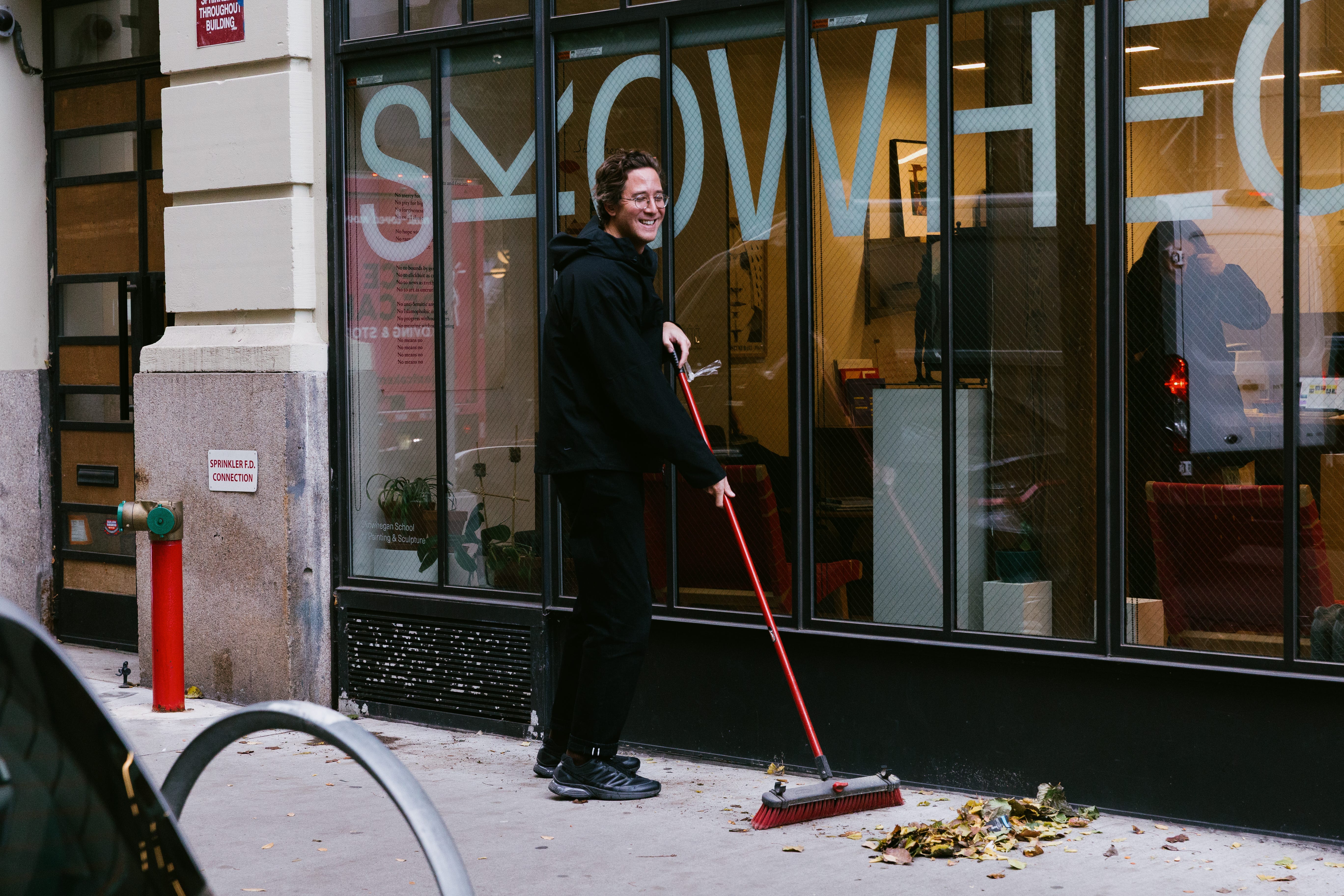
If I started a design studio, I’d model it after New Information. Dave Yun launched the venture after working at 2x4 and Pentagram, and co-founding Wax Studios. At New Info, Dave and his team “see design as a conduit to connect people, ideas, and objects in the world,” making books, websites, installations, and all kinds of wonderful things across the arts, design, technology, and fashion. They played a key role in dreaming up the Vowels store at 76 Bowery, the most relaxing place in this wonderful, chaotic city. We talked about building a design-led studio, managing versus creating, and why artists matter.
Three Point Four Media: How do you describe New Information?
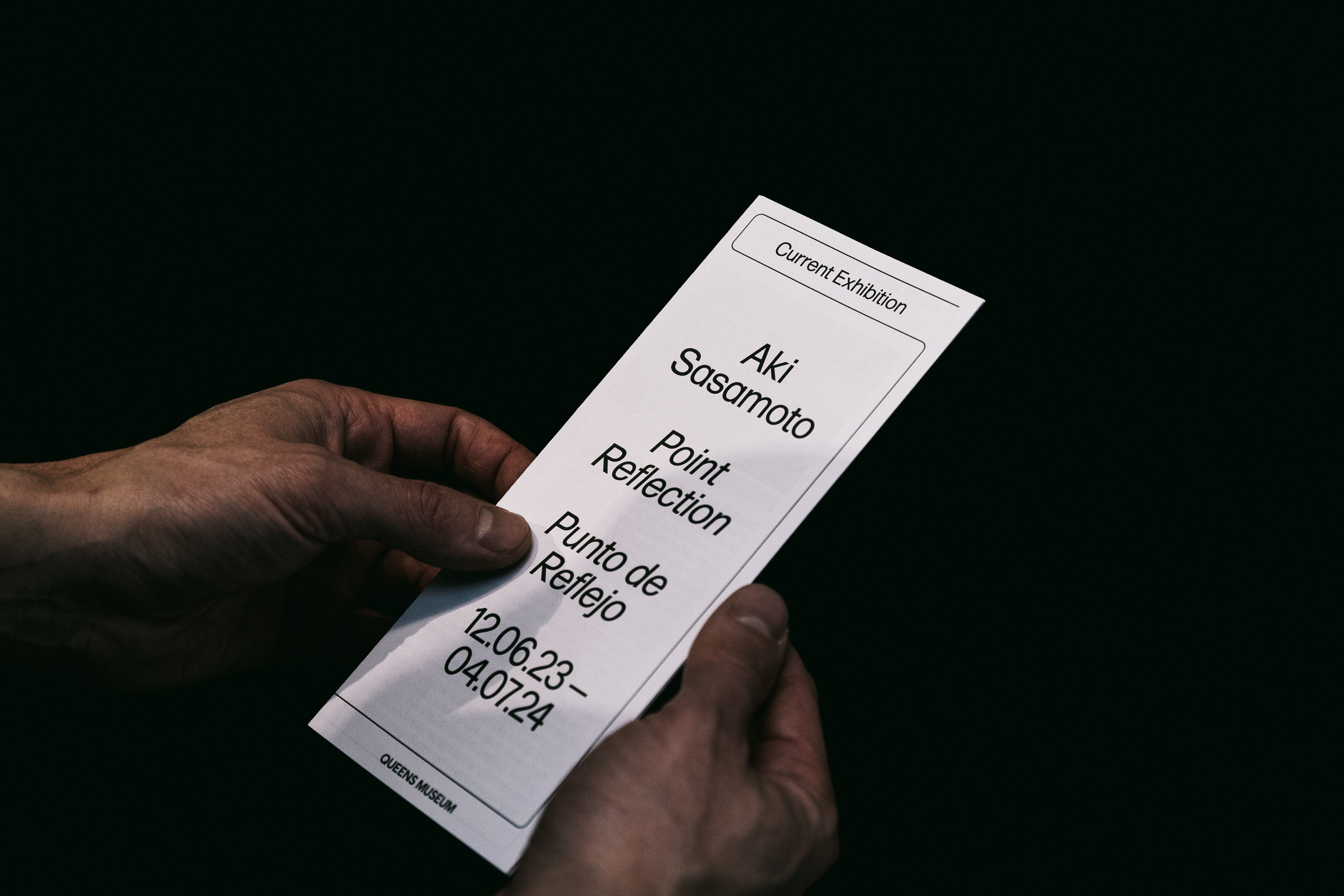
David Yun: We are truly a design-led studio. I come from a background of loving the art world. Like a lot of designers, I was inspired by music posters and album covers growing up, but seeing art in museums was a constant thread throughout my childhood. I remember going to the Museum of Contemporary Art in Chicago, wandering into a Tom Friedman show, and loving the artwork but also taking home this beautiful program and thinking, “What is this thing? Who made it?” That program made me feel like I was participating in his work. I wanted to find ways to bring this kind of participation with art into my own creative practice.
I also think about how to hold creativity and commerce in balance. It’s funny. Last year, we had a really amazing person come and work with us. She helped transform some of our communications, and kept saying, “log line, log line, log line.” We’re designers. We didn’t know what a “log line” was. We’re not really in the sales or marketing territory for our business, so I’m constantly learning how to be a better salesperson.
Pearl Jam used to sell posters at their concerts, a different one for each show. Now, of course, they are collectors items. You can go on eBay and get one from their 1998 tour for $800, but initially they were something you could take home with you for $25.
It’s the memory of the experience that’s really incredible. It’s really exciting what a piece of ephemera can hold.
Just to be clear, that’s where my career started maybe 25 years ago and it has evolved since. What’s really fun is working with younger designers who take so much pleasure in making every single thing. I love to enable them. I’m not a design director or creative director who wants to own every design achievement. I truly celebrate the work that my designers do with me. It’s a collaborative process, and I’m very hands-on, but I don’t need to claim authorship of everything that comes out of our studio. I’m free floating and managing a lot of different projects, but I’m not on the ground doing all the design work all the time.
It feels rewarding to watch young designers as they start to form pragmatic skills as the ideas start to click. That first time they make something, it gets printed, and delivered into the world is exhilarating. Those moments inspire an infectious enthusiasm that I love to share with them.
Was that pulling back an intentional choice or did it happen naturally?
Even when I was at 2x4, I began to realize that I was getting better at coordinating, visioning, and crafting the ideas. There are designers who really just want to make and there are designers who want to facilitate the making. I was on a team with an art director and a senior designer, and suddenly I was managing all the projects. I liked it, and they liked it.
When I left, it made a lot of sense to me to keep facilitating even though at first I was making everything on my own. I had some incredible projects. I partnered with Cory Arcangel to make an exhibition catalog for his solo show in Denmark. Cory and I worked closely together with the photographer Sacha Maric on making the book. I love working with people who are creative, collaborative, trusting, and inspiring. That was an early moment where I thought that leading my own studio could work.
I worked on my portfolio for an entire year.
That makes a lot of sense to me. When I was freelance writing, I was doing all the work myself. Now, at Three Point Four Media, it’s a lot more about managing, being a good collaborator, and finding the right people to work with on a specific project.
At work, one of the things that I’ve been focused on is cultivating an environment where my designers feel nurtured. That sounds kind of touchy-feely, but I want them to feel like they have the space to make great work. I set up the parameters and the definition around a project so they can understand the expectations. They can come to me when they have questions or need direction, but talented people need space to create great work.
How do you balance between making physical products and digital ones?
I wasn’t originally trained as a graphic designer. I studied anthropology and music, and had a great love for design. I graduated from college right after the dot com crash in 2000, and there were no jobs. A friend had landed a job in New York making websites and I joined him. It was such a small business that I was doing front-end design, programming the sites, and setting up web servers. I was learning everything about it. Meanwhile, I was starting to realize how much I liked typography and emulating seminal studios like Designers Republic or Pentagram.
My sister is an artist and she suggested I go to grad school. She told me Yale had a good design program. I started looking into it, and I realized it was everything I fantasized about. I worked on my portfolio for an entire year.
I had been doing digital at the website company, and then at Yale I shifted to thinking more about type and book design.
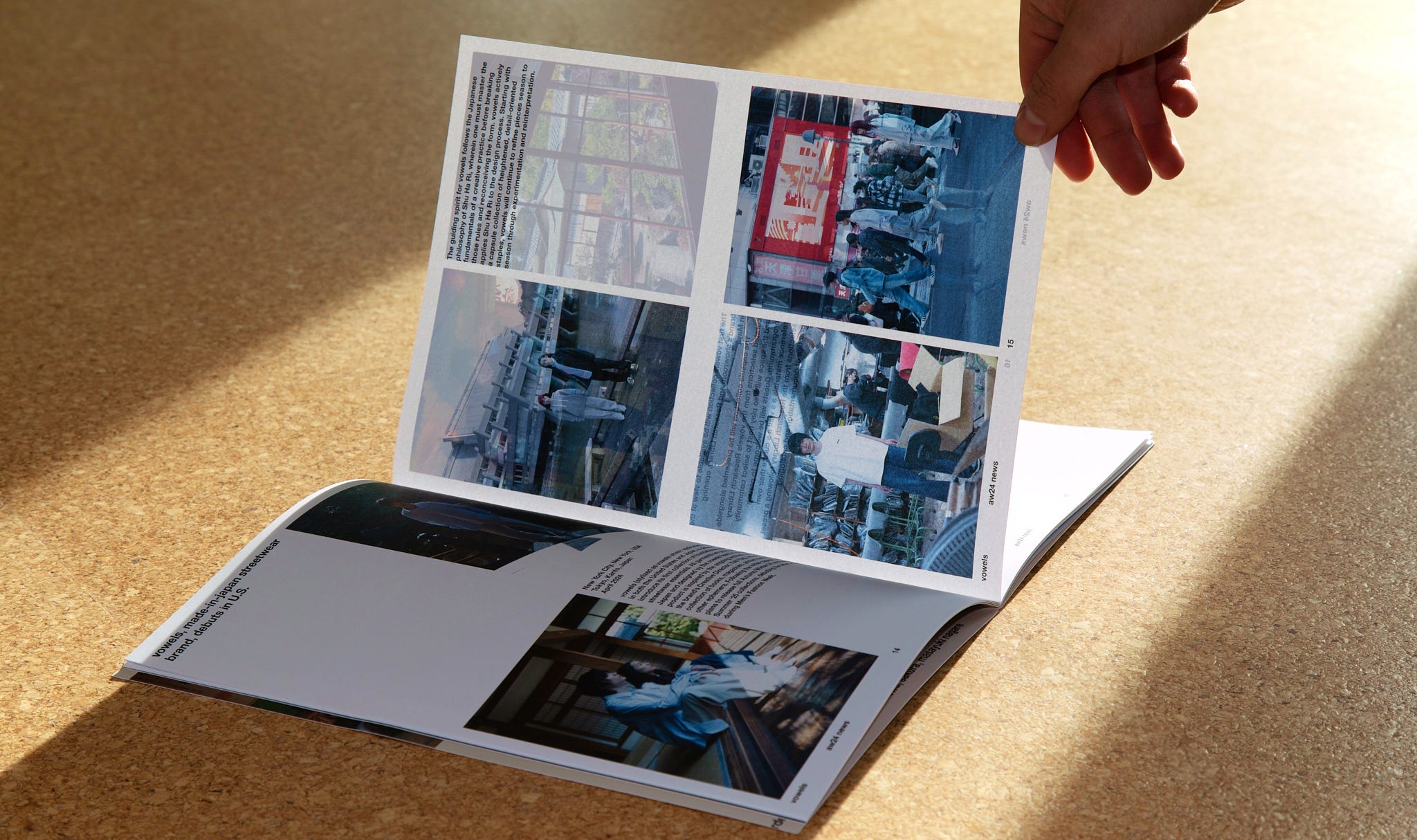
That period cemented the idea of seeing design through the lens of bookmaking. In the studio, we talk all the time about how every design project is essentially a book project. Every project has some level of system: a cover, a sequence, and a storytelling element. It’s very important to me that each New Info designer works on one book when they’re here. I want them to really get into the weeds of a system and learn how to make a system come alive through very basic components that are static but also moving in time.
I really don’t think so differently about something that’s going online versus going to print. In the studio we ask ourselves how does a book become a screen, or how does a book become a website, and vice versa.
I like to be around artists because they’re always imagining and asking: “Why this?” “Why now?” and “What are we doing?”
How is AI entering your workflow?
I’m playing with a lot of different methods at different levels. Because my role is so managerial and administrative, I use it for framing out complex proposals. For example, I just had a call with a client. They wanted a set of communication tools. It’s all pretty complex. I need to work with my developer, my strategist, and my designers to understand how much time everything is going to take. It’s really helpful to throw all of those considerations into my AI tool and have it structure the process. I usually end up rewriting a lot of the proposal but that initial scaffolding is useful.
We use AI in the studio, too. Last week, one of our designers was trying to figure out an animation, and he was like, “Oh, did you want something like this, Dave?” He showed me a fully baked animated website that he made in 15 minutes by using Claude . It was incredible, and he could tweak it so easily. We also use Photoshop’s AI tools. It’s a scrappy way of removing a person from an image or silly stuff like that. We haven’t gone deep into cloud design yet, but it’s intriguing. I think it could help us workshop ideas. A lot of what we make is design systems, and we’re always very curious about how a system is going to play out.
With that said, AI is currently changing our entire world culture and economy. I’m concerned about the embedded power structures, and the ways in which inequities are built into the code itself.
It’s become undeniable in the last few months that this thing is useful in a way that it wasn’t a year ago, and I don’t particularly see it slowing down anytime soon. It’s a little frightening.
A few years ago, I worked on a show with the Ford Foundation Gallery. It was called What Models Make Worlds: Critical Imaginaries of AI and it was organized by Mashinka Firunts Hakopian and Meldia Yesayan. The show gathered together a wide variety of artists who were asking questions about AI, not just asking about where it was going but who was in control. Who is writing the scripts and how is the structure of AI creating inequities or imbalance of power?
Three years ago, they were anticipating these urgent questions that really need to be answered today. I like to be around artists because they’re always imagining and asking: “Why this?” “Why now?” and “What are we doing?”
"The best journalists are the ones that you can have tough conversations with."

For a few years, a small part of Neil Buethe’s job was to call up and yell at me. Or perhaps, more accurately, have a frank exchange of ideas. Neil was chief communications officer at the U.S. Soccer Federation, an organization he joined in 2003. I was