
“We never would have gotten here had I just been a journalist.”
The TPF Q&A with Alloy’s Rory Carroll
Rory Carroll is always tinkering. The veteran automotive journalist knows what he wants, which is why he does equal parts hilarious and amazing things in the garage, like tearing apart a 2007 Lexus SUV to his preferred specs or whatever it is he did with this race car. Last year, Rory built his own machine: Alloy, a website about cars and car enthusiasts. Alloy is a new kind of publication with an ambitious premise: Give readers deep and nuanced reporting, beautiful visuals, and an ad-free experience. “What we’re doing hasn’t been done before,” Rory wrote in Alloy’s launch post. “It might not work.”
Rory has worked on all sorts of stuff besides old cars: Legislative politics, Jalopnik editor-in-chief, Autoweek publisher, a stint in marketing at RM Sotheby’s. We called him up to talk about the shifting automotive ad environment, starting a new publication, and the fastest way to get out of a car dealership with the car you want.

Three Point Four Media: Why did you decide to start a media company in the current environment?
Rory Carroll: I fundamentally think there is a real business there. In autos especially, there’s more interest than ever: old cars, new cars, hobby, culture. There is a huge, active audience that spends money and there is a huge industry that wants to talk to them. Our thesis is that the mechanisms or the infrastructure of media and social media are not connecting the two sides and the flailing and misalignment is creating a bad experience for everyone involved.
When I got to Jalopnik, we were doing 300,000 impressions a week and we got up to two million+ impressions a week. It really didn’t make a huge difference in the business. To get there, we had to focus on speed and volume, sometimes in a way that degraded the content and the product. As a reader on the internet now, you feel disrespected, you feel like these people think you’re an idiot. People deserve something better, both readers and the marketing side.
What do you mean by misalignment?
The main thing is that the basic currency of all these digital media businesses is display ads and programmatic. Almost everyone making content for the internet is in the business of serving these ads that I don’t think anyone really believes are effective. They never see the other side of that equation, where the publisher is incentivized to make super low-cost clickbait and slop to goose the numbers and impressions on the ad. The reader is getting super low-value commodified content. It’s not fun to read, and it’s a super annoying ad experience.
How do you realign that?
The ideal for how to bridge the gap is the reader has to feel like they are getting real value out of the site and the marketer has to feel like they are getting real connections to those readers.
When we were building Alloy, we spent a lot of time on the phone with CMOs at car companies. The one thing that stuck with me really early on is one of them said, “10 years ago, I could spend a bunch of money on Jalopnik or one of these other sites, get a ton of impressions, and go to my boss and say, ‘We got 10 million impressions for X number of dollars.’ And my boss would say, ‘Great job.’ Now if I do, they say ‘How many cars did you sell?’” If you can answer that question, that’s the holy grail for publishers.
The car thing is so able to deliver on big, meaningful, and very rich experiences in real life.
But publishers aren’t in the business of selling cars, right? You’re in the business of writing about cars and recommending cars. Why did that mandate for CMOs change? Is it because numbers drive everything now?
There’s so much data out there, there’s an expectation that everything is going to be tracked. Previously, you could get away with the idea of awareness. Marketers would go to Car and Driver or auto websites and say, “Hey we love your magazine, but your readers don’t buy RAV4s, and we need to sell RAV4s.” Car and Driver could come back by explaining that their readers recommend RAV4s all the time. That still happens, but the car marketers are under pressure and more conscious of ROI.
Alloy doesn’t have ads. From a business standpoint, what is the right mix of subscriptions, events, and brand partnerships?
It’s unclear, to be honest. We’re a few months in. We have membership revenue, we have some pitches on the horizon. Everybody goes into this with an idea of what it’s going to be like when it’s live. Then it goes live and you adjust. Stuff has to happen away from the site and from social platforms. Events will be a huge part of that. Our merch is part of that, too. The car thing is so able to deliver on big, meaningful, and very rich experiences in real life.
You can watch someone’s old weird frankencar on YouTube, but it’s more fun to see in person, and there are car companies, liquor companies, and direct-to-consumer companies that would pay to be part of that in a way that you and the Alloy team wouldn’t find offensive.
Exactly. The whole experience of car culture is electric, and it’s so rare to have something like that where you can be so engrossed. That’s where the power of this thing is.
Car companies spend billions of dollars on engineering the perfect car, and it always comes down to some Midwestern asshole sitting at his desk at the dealership who is not interested in selling the car. Imagine if that was Apple’s model!
You can also capture a lot of photos and videos at those events that can be used in service of the brand partners.
I hate using the word brand partners, but it doesn’t have to be gross. It feels gross when Mark Zuckerberg is stealing your data and selling it to someone else. But if I’m in the process of building a race car and I find a specific tool through a brand partnership that solves a huge problem for me, that feels good.
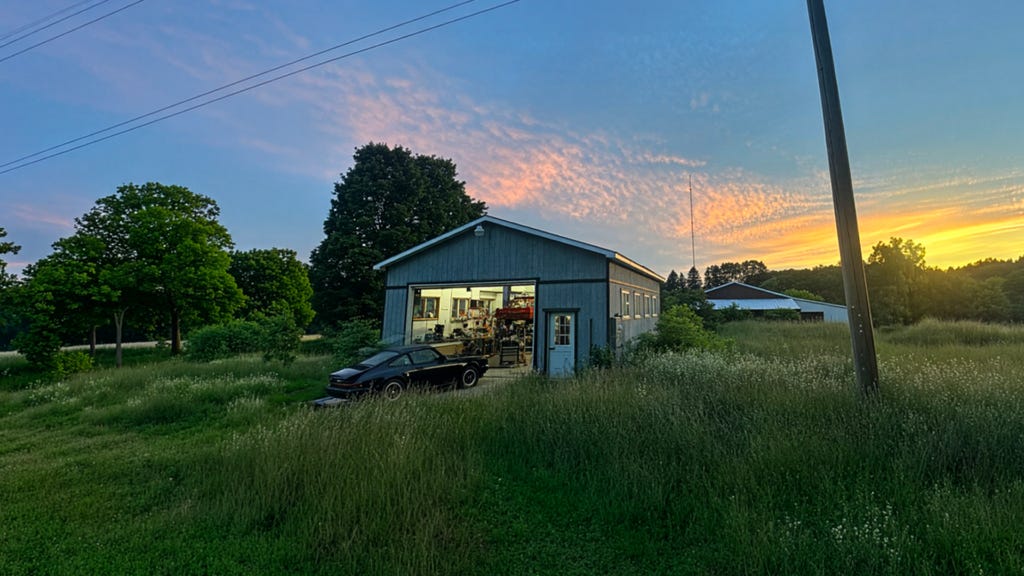
You’ve had a lot of jobs in and outside of journalism. You worked in legislative politics, marketing, you were the publisher at Autoweek, you worked at RM Sotheby’s. How have all those various jobs shaped the way you work and what Alloy is?
I have a lot of friends who are great journalists and blissfully unaware of the sausage making process. Obviously, I’m not. I’ve bought ads before. I’ve bought programmatic before. I’ve been on all sides of it. I’ve sat in all the rooms there are to sit in.
We never would have gotten here had I just been a journalist. Alloy is what it is because we spent a ton of time thinking holistically from every angle of the business.
What have you learned in the last year that you wish you’d known when you started Alloy?
We launched with the smallest investment possible to launch the site. We probably could have launched with some more capital to flesh out the total offering better. Something that would have allowed us to do a launch event, assign bigger features, do more video. The stuff that is on our master plan, but show a little bit more of that to start vs. launching in this minimally viable state. Now, we’re six months in and have a body of work, but we’re constantly explaining to people that this isn’t representative of the full thing.
Couple car questions for you before we go. Car dealerships are depressing. The last two cars I purchased, I had an unpleasant experience at the dealership. What’s the best way for a normal person to buy a car?
Car companies spend billions of dollars on engineering the perfect car, and it always comes down to some Midwestern asshole sitting at his desk at the dealership who is not interested in selling the car. Imagine if that was Apple’s model!
Tom McParland at Jalopnik has written a lot about how the process should go to minimize the pain. Find the exact car you want, email the dealer directly, and ask for an itemized quote for the exact VIN number. Then do all of the negotiation via email. If they won’t do it via email, go to a different dealer. A lot of them will tell you it’s illegal to send quotes via email, which is not true. They will just lie. It’s a crazy business! It’s one of the only things in modern life where people are openly lying to your face.
Negotiate everything via email, then you should be able to go in, sign papers, and leave.
What’s your dream car? Does it exist?
That’s a really tough question. My stock answer would be an 8-litre Bentley from the 1930s. I have this incredible sensory memory of leaving a car show in Florida massively hungover in a rental Toyota Camry and an 8-litre Bentley came by us at 100 mph, and the top of the tire on the Bentley was at the roof of the Camry. But realistically a 100 Series Land Cruiser from 2003.
A Land Cruiser is a sensible car for a dad in Northern Michigan. You can justify that one.
[Laughs] My next car will probably be a 20-year-old Toyota.
"When I started my newsletter, I treated it like my full-time job."

Rachel Karten knows what makes the internet tick. She is the person marketers, editors, and brands text (if they’re lucky!) when they want to know what actually works on social media. Rachel is the rare and lethal combination of smart, creative, and
 | A guest post by
|